
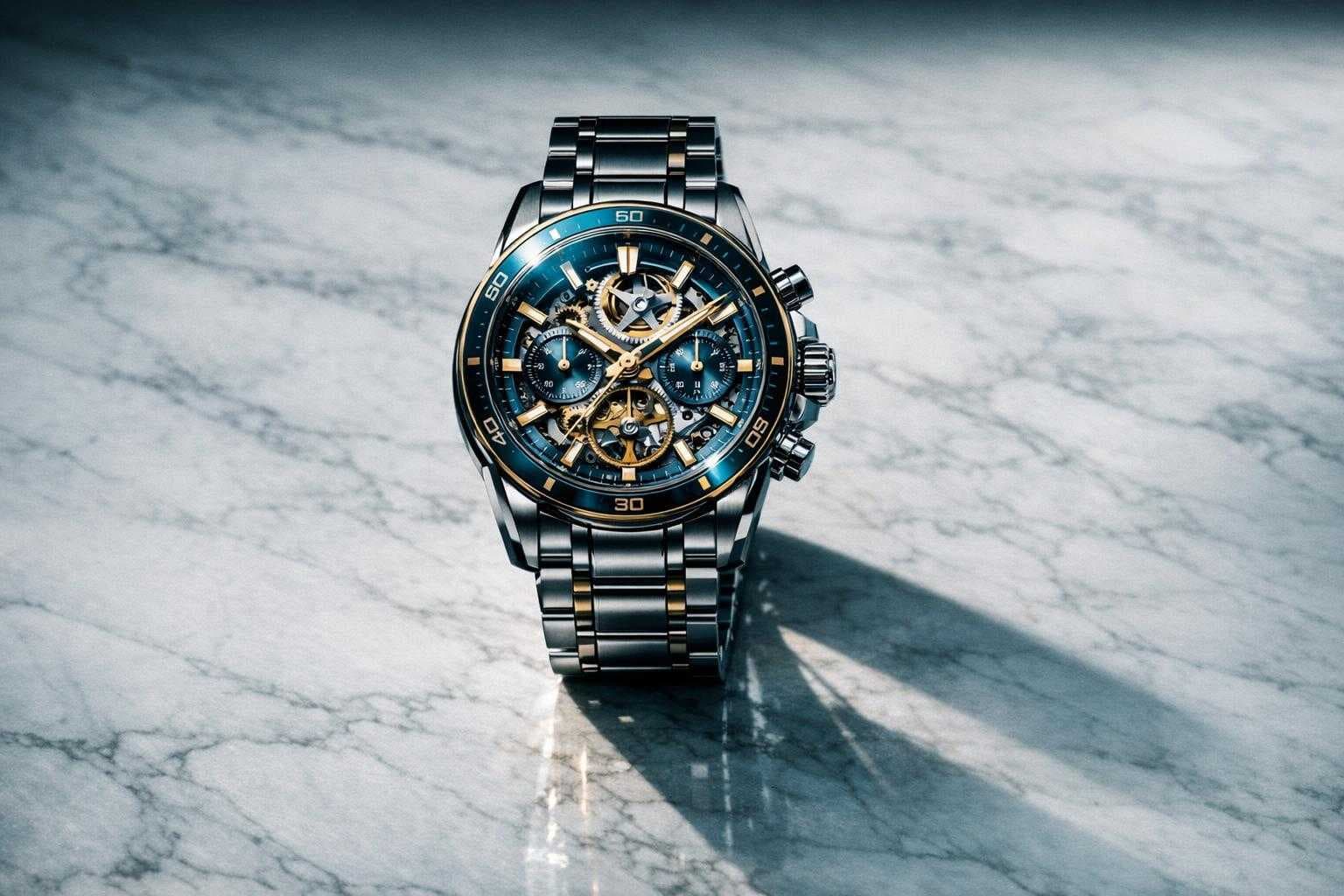



Pure Vision.
4x Faster.
The world's first native multimodal transformer for professional creation and surgical editing.
Built for the speed of thought.
Prompt
“Professional fashion portrait in a rain-slicked Tokyo street, neon reflections, 35mm film grain, 4K”
The Architecture of Precision
Built for Professional Creation.
Three capabilities. Zero compromises.
Region-Aware Precision.
Change only what you specify. GPT Image 1.5's deterministic editing locks the latent space of untouched regions, eliminating AI drift. The face, background bokeh, and lighting stay pixel-perfect while only the selected region changes.
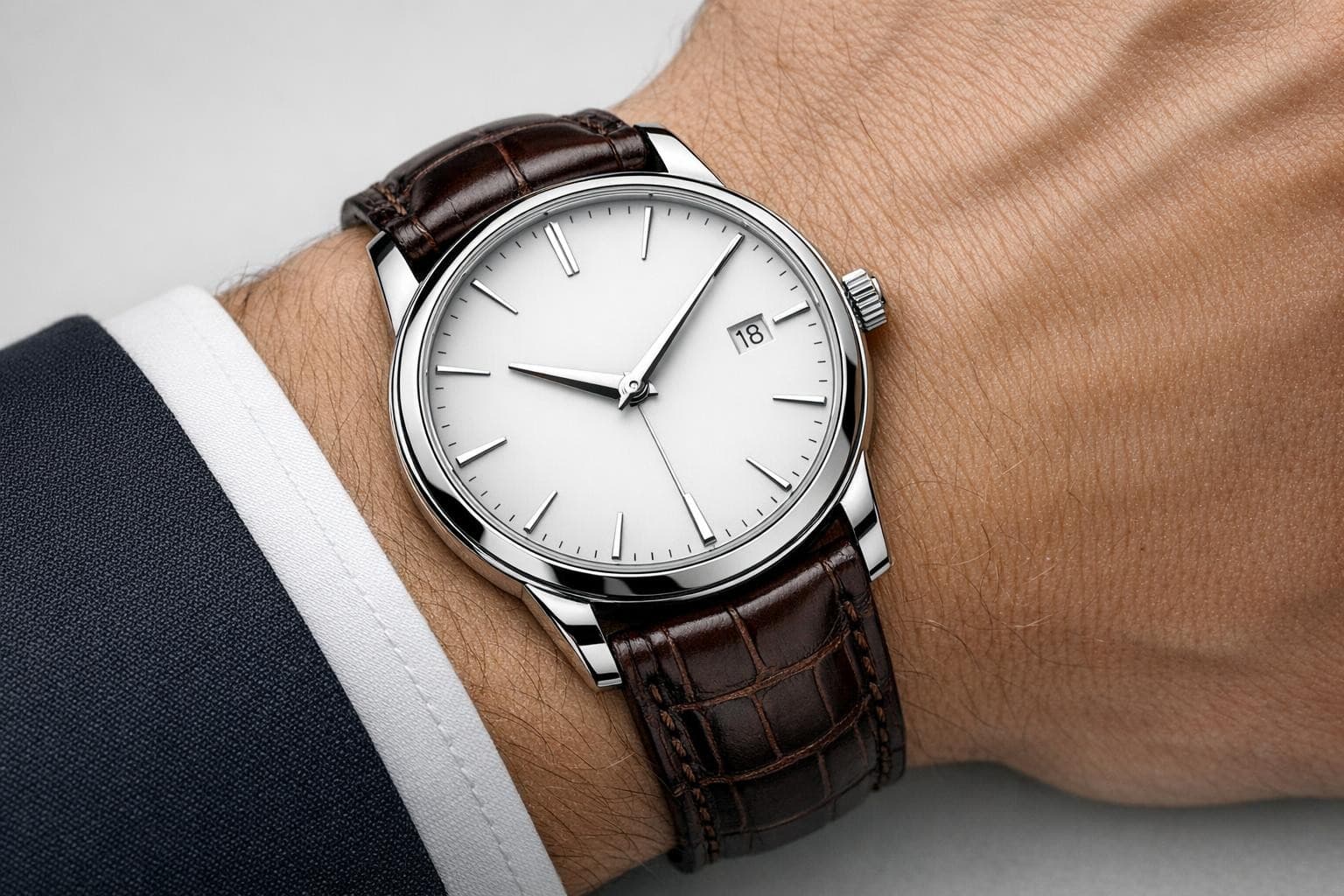
Prompt: “Change the leather strap to navy blue alligator skin, maintain all reflections.”
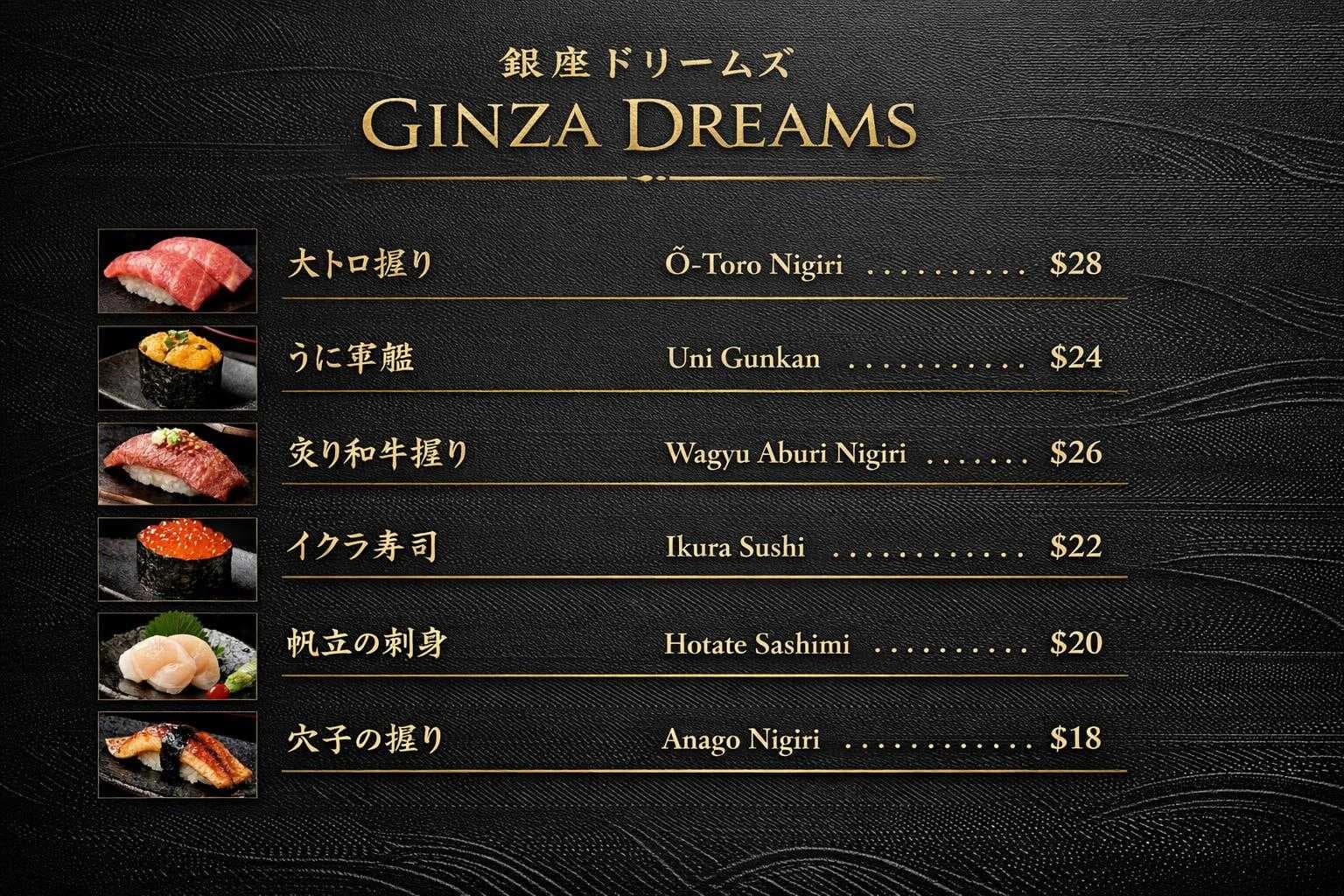
OCR-Native Precision.
Text is not decoration; it is data. GPT Image 1.5 processes text and pixels through the same neural network, producing crisp headlines, accurate price tables, and legible body copy without Photoshop intervention. The infographic revolution starts here.
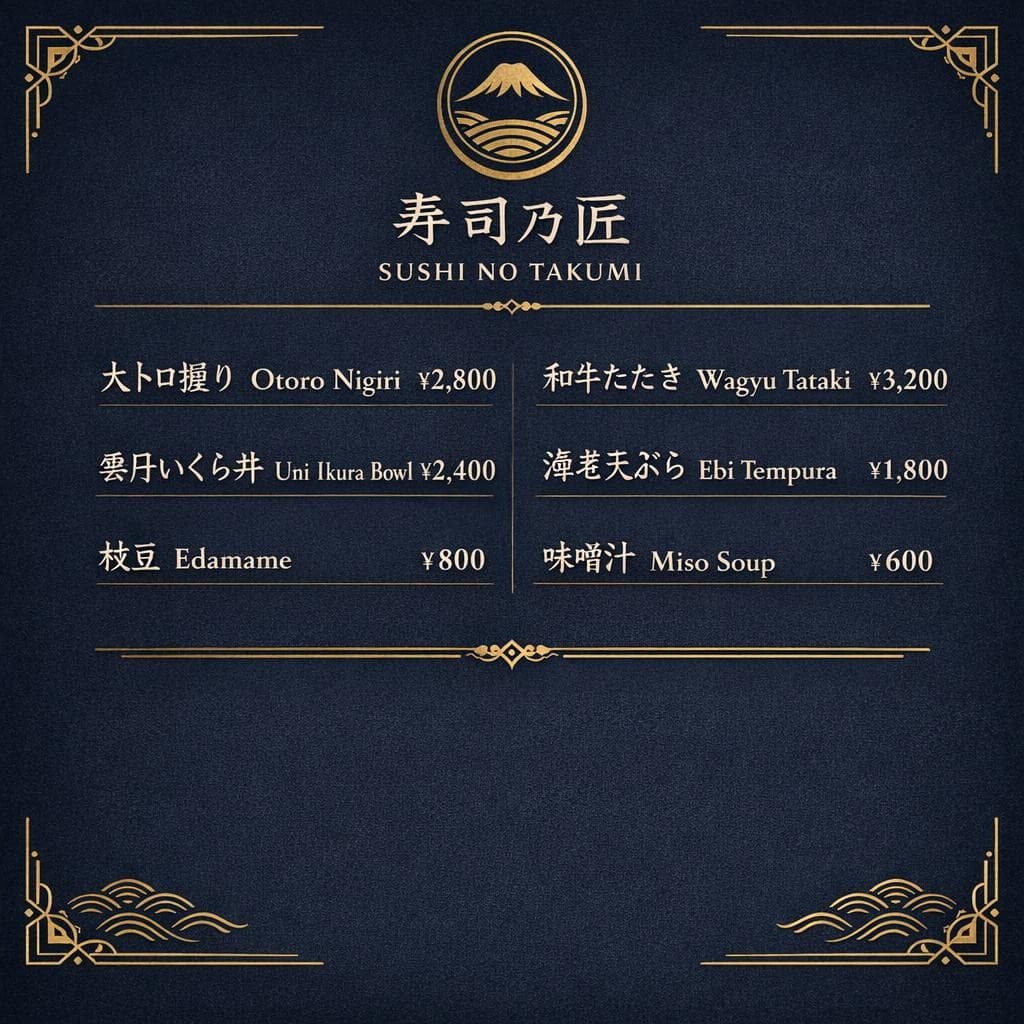
Sushi menu · precise kerning · price table
Brand Consistency Lock.
Upload a single reference photo. GPT Image 1.5 locks facial geometry, skin tone, and proportions, placing the same subject across unlimited seasonal and cultural contexts without identity drift. One shoot. Infinite campaign assets.
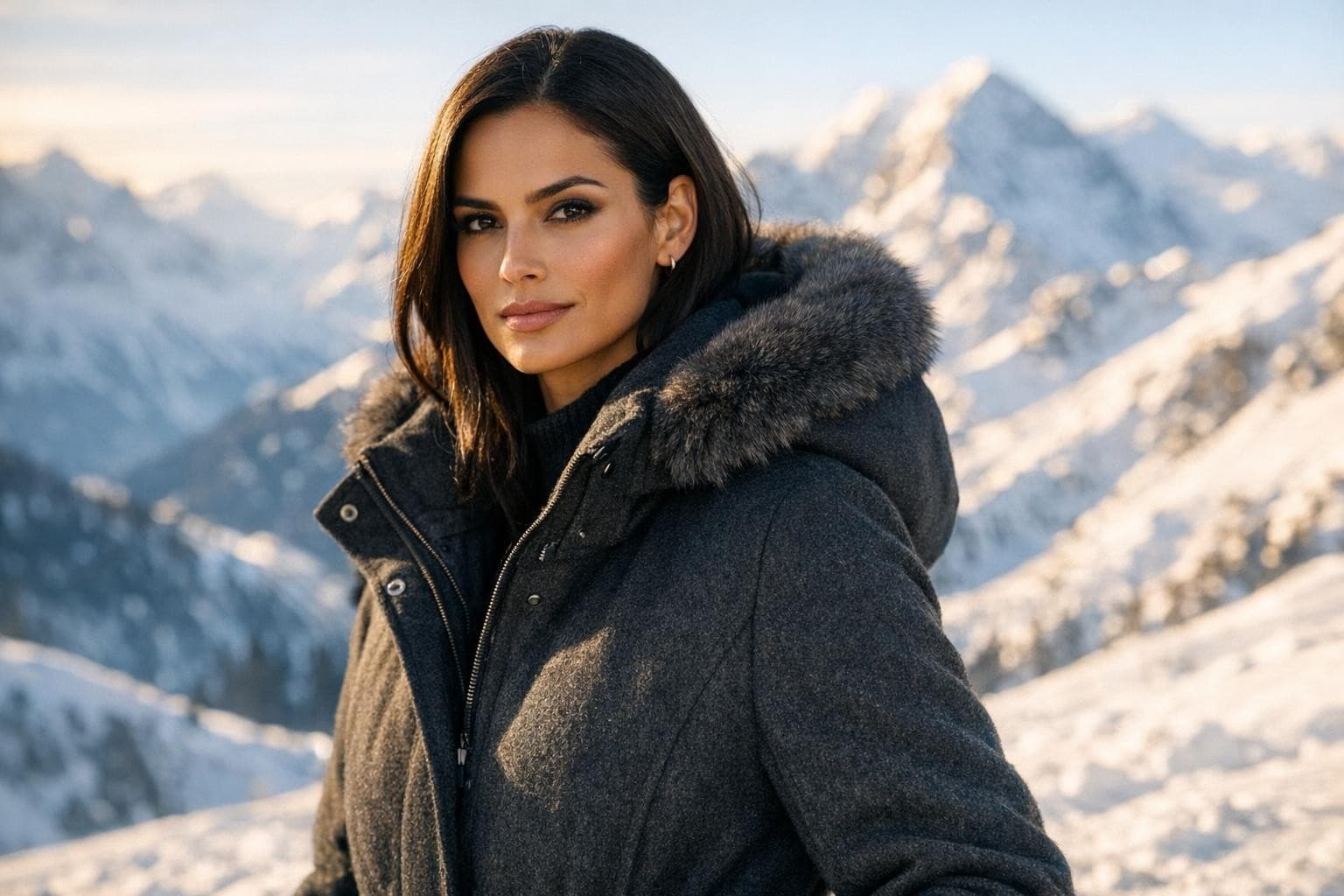
Winter Alps
How It Works
Thinks. Locks. Renders.
Intelligence at every layer.
4× Faster. Not 4% Faster.
Native Multimodal Speed.
Unlike earlier models that piped text through an LLM into a separate diffusion system, GPT Image 1.5 is built directly into the GPT-5 transformer backbone. Text and images are the same data type: tokens. This architectural unity eliminates the translation bottleneck, delivering high-fidelity generation in 40–60 seconds.
A creative team can now explore significantly more iterations per session than with GPT Image 1.0. The economics of brainstorming change completely.
Think First. Then Generate.
Thinking Levels.
GPT Image 1.5 introduces variable “Thinking Levels” where the model reasons through complex spatial arrangements before rendering. When arranging a 4×4 grid of distinct objects, it calculates spatial coordinates to prevent style bleed. When generating an ad with 40 language variants, it plans the layout before touching a pixel.
The autoregressive design predicts each visual token by computing probability distributions across both text and all previous visual tokens. This unified probability space is why "morning light on velvet" renders with physically accurate photon refraction, not a texture guess.
Deterministic, Not Semantic.
The End of AI Drift.
Semantic editing (used by older models) tries to “understand” the intent and redraws the image, often changing faces, backgrounds, and lighting. Deterministic editing locks the latent space coordinates of unedited regions. Only the specified pixels change. Everything else stays identical at a binary level.
For brands, "close enough" is failure. Deterministic editing is the only standard that matters in professional photography and branding.
⚠ bg shifted
⚠ lighting altered
✓ bg unchanged
✓ only target edited
Engineering
Boasting the Engine.
The architecture behind the intelligence.
Unified Token Space
GPT Image 1.5 treats text and pixels as identical data: tokens. When you describe 'morning light on velvet,' the model doesn't match keywords; it computes photon refraction physics from first principles before touching a pixel.
Deterministic Latent Locking
Region-aware editing pins the latent coordinates of every unedited pixel. The result is binary preservation: faces, backgrounds, and lighting are not approximated. They are identical.
Autoregressive Visual Prediction
Each visual token is generated by computing probability distributions across all previous text and visual tokens simultaneously. Complex multi-element compositions resolve spatial logic without post-processing.
Technical Specifications
Why it matters
When text and pixels share the same neural representation, “a shadow must correspond to its light source” is not a style rule; it is a mathematical constraint the model enforces automatically.
Competitive Analysis
The Professional Standard.
ChatGPT Image 1.5 vs Gemini 3.1 Flash. For brand consistency, deterministic editing wins every time.
ChatGPT Image 1.5
via Segmind API
Gemini 3.1 Flash (NB2)
Google DeepMind
0%
identity drift
If a brand ambassador's face changes between frames, the campaign is unusable. GPT Image 1.5's deterministic editing is the only viable choice for hero assets in professional branding.
Feature
ChatGPT Image 1.5
Gemini 3.1 Flash (NB2)
Enterprise Impact
How It Changes Your Business.
Not just what you create.
The 4× Efficiency Compound
A 4× increase in speed is not just faster images; it is a fundamental shift in creative staffing. A single art director can now explore 20 different creative directions in the time it previously took to render one. 'Brainstorming' happens in real-time. The cost of exploring a bad idea drops to near-zero.
Global Ad Campaign Workflow
Generate Master Asset
Create a high-resolution photorealistic hero image with your brand ambassador in the primary market context.
Precision Localization
Use region-aware editing to adapt the model's ethnicity and clothing for regional markets without touching the product.
In-Image Translation
Translate headline text into 40 languages while preserving the original brand font, layout, and design language.
Ship in Hours
A project requiring weeks of photoshoots and retouching is completed in hours. Same quality. Fraction of the cost.
Flexible plans for everyone
Whether you're just starting out or need enterprise-grade power, we have a plan that fits your needs.
Flexible
Pay as you go
Great for getting started and exploring Segmind platform, without any commitments.
- All Model APIs
- 1 GB Storage
- 5 Pixelflows
- 60 RPM
- Community Support
Pro
For professionals and small teams looking to build rapid prototypes and scale.
- $50 monthly credits
- 10 GB Storage
- 120 RPM
- Pixelflows basic
- 5 business days support
Business
For working with production environments and professional use cases.
- $99 monthly credits
- 100 GB Storage
- 500 RPM
- 2 business day support
- Pixelflow Premium Templates
Scale
For large companies that requires custom solutions and private deployments.
- $599 monthly credits
- 1 TB Storage
- 1000 RPM pooled
- 1 business day support
- Detailed usage analytics
Enterprise
Custom solutions with enterprise-grade security and support
FAQ
Frequently Asked Questions
GPT Image 1.5 moves from a two-step architecture (LLM → diffusion model) to a fully unified native multimodal transformer built on the GPT-5 backbone. This eliminates the 'translation layer' between text understanding and image generation, cutting generation speed while dramatically improving instruction following, text rendering accuracy, and editing precision.
Deterministic editing means GPT Image 1.5 locks the latent space coordinates of every pixel you did not ask to change. When you say 'change the watch strap to navy alligator skin,' only those pixels change; the face, background, lighting, and everything else are preserved at a binary level. Semantic editing (used by older models) redraws the image to match intent, often accidentally changing faces and backgrounds. For brands, 'close enough' is failure. Deterministic editing is the only professional standard.
Likeness Upload lets you provide a reference photo of a person, product, or brand asset. GPT Image 1.5 locks the facial geometry, skin tone, and proportions, then places the same subject across unlimited environmental and seasonal contexts without identity drift. A single brand ambassador photo can generate an entire 12-month global campaign with consistent identity across all assets.
In previous models, text was treated as decoration; the model approximated letter shapes without understanding them as data. GPT Image 1.5 processes text and pixels through the same neural network, meaning it understands that 'Price: $24.99' is structured data requiring precise kerning, alignment, and correct character rendering. The result is legible menus, signage, UI screens, and marketing materials generated in a single pass, with no Photoshop correction required.
Thinking Levels enable variable chain-of-thought reasoning before each generation pass. For simple prompts, standard generation is sufficient. For complex compositions such as a 4×4 grid of distinct objects, a multi-element scene with precise spatial constraints, or a localized ad with 40 language variants, activating higher thinking levels causes the model to reason through spatial coordinates, lighting physics, and layout logic before rendering. This dramatically reduces the need for regenerations.
Google's Nano Banana 2 excels at web-grounded, trend-aware social media content; it integrates live search to reference current events and real-world data. GPT Image 1.5 is optimized for brand consistency and professional production workflows. Its deterministic editing and Likeness Lock make it the only viable choice for hero campaign assets where identity drift between frames would make the campaign unusable.
GPT Image 1.5 is available through the Segmind API with three quality tiers: Draft ($0.011/image), Standard ($0.042/image), and High ($0.167/image). Enterprise customers can contact Segmind for custom throughput and dedicated infrastructure. You can also access the model through the ChatGPT interface: Free (2 images/day), Plus ($20/month, unlimited), or Team/Enterprise for agency-wide collaboration.
Visual Sovereignty.
At the speed of thought.
Join developers and creative studios already using GPT Image 1.5 to build production-grade visual workflows at a fraction of traditional cost and time.
ChatGPT Image 1.5 is an OpenAI model, available on Segmind as part of our global model API platform.
Segmind is an official OpenAI API partner.