VEED Lipsync v2 — Video-to-Video Lip Sync & Dubbing
What is VEED Lipsync v2?
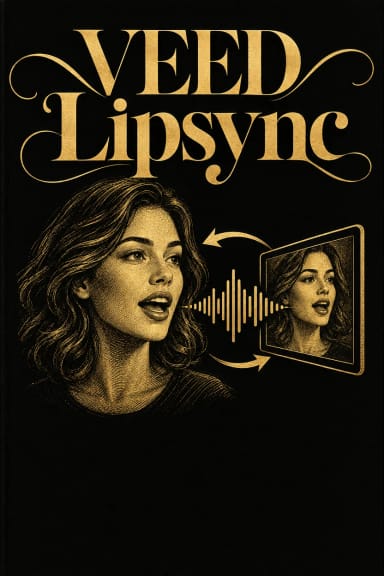
VEED Lipsync v2 is a video-to-video lip sync model that re-syncs a talking-head video to a new speech audio track. You provide a source video and an audio file, and the model detects the on-screen face and re-renders the mouth so the speaker appears to naturally say the new audio. Unlike first-generation lip sync, VEED Lipsync v2 transfers emotion, speaking style, and timing directly from the audio, so the output reads as the speaker's own performance rather than a generic AI overlay. It is zero-shot: there is no per-subject training, reference footage, or fine-tuning, so it works on any new face the first time — ideal for automated dubbing and localization pipelines.
Key Features
- •Emotion and speaking-style transfer straight from the driving audio.
- •Zero-shot lip sync that works on any face with no training step.
- •Video-to-video on real footage, keeping your original take intact.
- •Language-agnostic audio input for multilingual dubbing and localization.
- •Simple two-input API:
video_urlandaudio_url, returning a finished MP4.
Best Use Cases
- •Dubbing and localization: pair the source video with translated voiceovers to ship market-ready versions without reshooting.
- •Ad iteration and A/B testing: swap in a new hook on the same take.
- •Line fixes: replace a flubbed sentence without a re-record.
- •AI presenters and avatars: drive existing footage with fresh scripts.
In testing, a front-facing talking-head clip re-synced cleanly to a fresh TTS track with natural mouth movement and no visible artifacts.
Prompt Tips and Output Quality
VEED Lipsync v2 is driven by media, not text prompts. For the tightest sync, use a clear, forward-facing, well-lit clip with the mouth visible throughout, and clean speech audio. Keep the audio no longer than the source video, since the output duration follows the audio. Best results come from a single active speaker; non-human subjects are unsupported.